


MARVEL Future Fight
Netmarble
I spent time with MARVEL Future Fight as a mobile role-playing game, and my first impression was that it is much easier to understand than its crowded superhero roster might suggest. The basic appeal is simple: build a team from Marvel characters, improve them, and take them into battles that reward better choices as much as stronger numbers. It is free to play, developed by Netmarble, and its Teen rating makes it a game aimed more at older children and adults than very young players.
What makes the experience worth discussing is not only the size of its character collection. The game asks you to manage several layers at once: which heroes belong together, which characters deserve resources, when to activate abilities, and how much time or money you want to invest. I found that the most enjoyable sessions came from treating it as a long-term collection project rather than expecting every battle to be a demanding action game.
How MARVEL Future Fight feels to use in different situations
Readability and navigation across a busy superhero game
The interface has a lot going on, but the main loop becomes familiar quickly. I could move from team selection to combat, then return to improve characters without needing to relearn the entire layout each time. The important decisions are usually presented around the roster, missions, upgrades, and rewards, so a player who enjoys organizing a collection will feel at home.
Related News

Fruit Ninja®: The Timeless Appeal of Digital Slicing

How OS Updates Enhance Roblox Adventures

Mastering SimCity BuildIt: Elevate Your City-Building Strategy
That said, the number of systems can make the first stretch feel dense. A new player may see several upgrade choices before understanding which ones matter most. My advice is to resist spending every reward immediately. First, play enough to identify the characters you actually enjoy using, then concentrate resources instead of spreading them across the entire roster.
Text-heavy menus are a practical consideration. The game communicates a great deal through labels, icons, item descriptions, and small interface elements. I found navigation manageable on a modern phone, but a smaller display or reduced visual clarity can make the upgrade screens tiring. Players who prefer games with large, sparse menus may need more patience here.
Related News

Why WhatsApp Messenger Still Makes Everyday Communication Feel Easy

Jurassic World: The Game Is the Better Dino Tycoon for Strategic Players

Threads in Real Life: Who Should Join, Lurk, or Leave

How SHEIN Turned Shopping Into an Endless Content Feed

How to Make Fortnite Feel Smarter on Mobile

Should You Switch to Microsoft Outlook on Mobile?
The visual presentation is clearly designed around Marvel’s recognizable heroes, so portraits and effects help identify what is happening. Even so, visual recognition is not always enough. When several attacks overlap, the screen can become busy, and it is useful to learn the shape and timing of each character’s abilities rather than relying only on text.
One useful habit is to separate browsing from playing. I would look through the roster and upgrade options when I had time, then start a mission only after deciding which team I wanted to test. This reduced the feeling of being pulled between menus and made short sessions more focused. It also helped me notice which improvements had an immediate effect and which were better saved for later.
Combat, controls, and motor comfort
Combat is approachable because the game does not demand the same kind of precise aiming as a traditional console action title. I could concentrate on movement, ability timing, and switching between heroes rather than trying to perform complicated button combinations. That makes it a reasonable choice for players who want superhero action without a high mechanical barrier.
Gallery
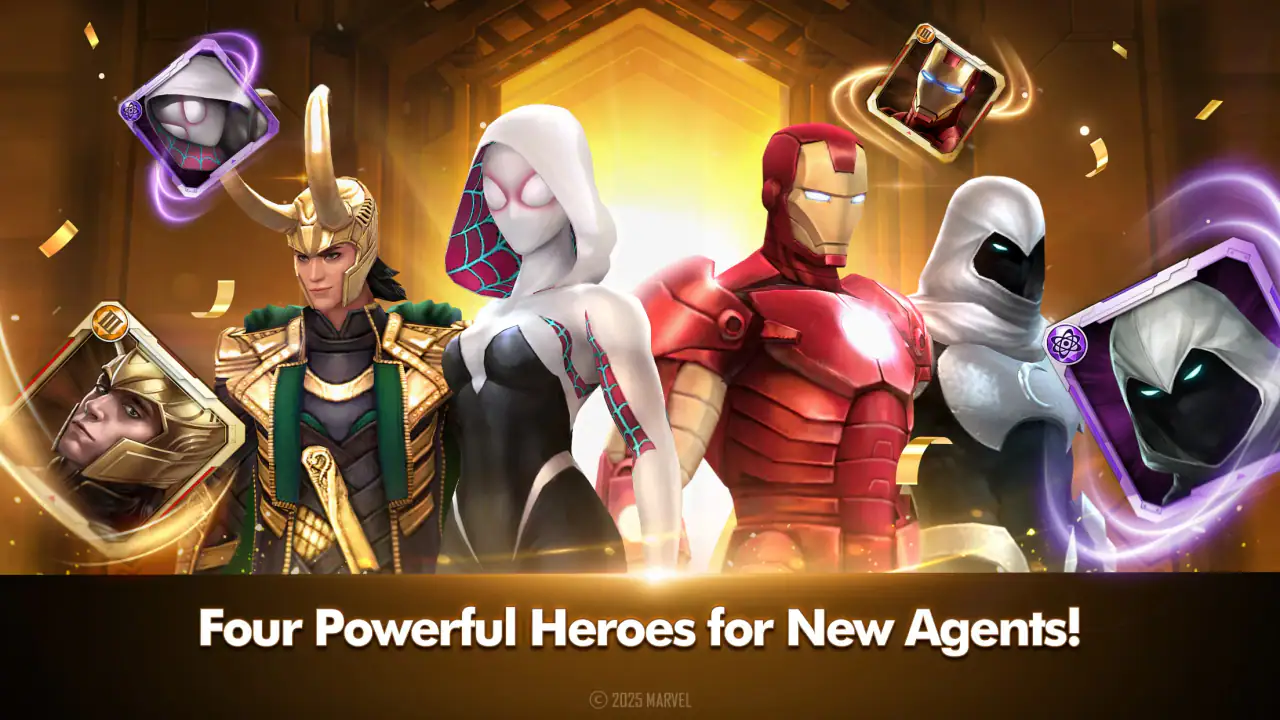
However, approachable does not mean effortless. Battles can become visually active, and the player still needs to notice attacks, choose abilities, and react at the right moment. Anyone who finds rapid touch interaction uncomfortable may prefer shorter sessions. Holding a phone steadily for a long period can also become tiring, especially when the most interesting part of the game encourages repeated missions and character development.
I found that playing with a deliberate rhythm worked better than tapping constantly. Instead of activating every available ability immediately, I watched for a useful opening and then used the strongest option. This reduced unnecessary input and made the combat feel more controlled. It is a small adjustment, but it matters for players who want to limit repetitive touching.
Team composition also creates a motor advantage. If one character’s style feels awkward, another may fit better, and changing the team can alter how demanding a mission feels. I would not assume that a powerful character is automatically the most comfortable one to use. The best choice is often the hero whose abilities are easy for you to recognize and trigger consistently.
There is a trade-off here. A player looking for completely relaxed automation may find the game too interactive, while someone wanting deep manual control may find the mobile combat less precise than a dedicated action game. It sits between those extremes: more involved than a passive collection title, but less exacting than a competitive fighting game.
Visual effects, sound, and sensory load
The superhero theme naturally brings bright effects, fast movement, and dramatic attacks. Those effects make successful abilities satisfying, but they can also increase sensory load during crowded encounters. I sometimes found it easier to follow the battle by focusing on the active character and the immediate objective instead of trying to interpret every animation on screen.
Players sensitive to flashing visuals or dense motion should approach cautiously and test the game in a comfortable environment. I would begin with a short session rather than assuming that the colorful presentation will suit everyone. The same spectacle that makes the game feel like a Marvel adventure can become distracting when several abilities trigger together.
Sound is helpful for atmosphere, but I did not consider it essential to understanding the basic loop. That is useful when playing in public, at work during a break, or in a household where audio would be disruptive. The game remains recognizable as a collection-and-combat experience when played quietly, although the visual activity still requires attention.
Brightness and screen size also affect comfort. On a compact phone, menus and combat effects compete for limited space. On a larger screen, teams and action are easier to inspect, but longer play sessions may encourage more time holding the device. I would choose the setup that reduces strain rather than assuming that a bigger display automatically solves every usability issue.
Short sessions, interruptions, and everyday use
One reason I can imagine returning to MARVEL Future Fight is that it fits naturally into spare moments. A player can check progress, improve a favorite hero, and complete a small amount of activity without committing an entire evening. In an everyday scenario, I might play during a commute break or while waiting for an appointment, using the time to handle a few missions instead of beginning a long story-driven game.
That convenience has limits. Collection games often encourage “one more upgrade” or “one more mission,” and the amount of available management can quietly extend a short session. If you need a game that ends cleanly after a single round, this may require self-discipline. I found it helpful to decide beforehand whether I was playing for combat, roster management, or rewards.
Interrupted play is another important consideration. A phone game is more accessible when it can fit around real life, but a player who dislikes pausing between tasks may become frustrated by long menus or repeated preparation. The experience is best for someone comfortable returning to an ongoing project rather than expecting a complete beginning and ending every time they open it.
The free entry point makes experimenting easy. You can discover whether the controls, presentation, and progression suit you without paying first. At the same time, the in-app purchase range runs from $0.99 to $209.99 per item, so spending boundaries matter. I would recommend deciding on a personal limit before buying anything, especially if collecting specific heroes becomes emotionally appealing.
Where the game is welcoming, and where it still asks for effort
The strongest inclusive quality is flexibility in how you engage with it. You can approach it as a Marvel fan, a team-building hobby, a light action game, or a long-term upgrade project. You do not need to be an expert in every character to begin, and the familiar roster gives many players an immediate point of recognition.
The game is also more forgiving than titles that depend entirely on fast reflexes. Building a stronger team can compensate for imperfect timing, and learning the roster gradually gives players room to find a comfortable style. For someone who enjoys planning more than twitch reactions, that balance is a genuine strength.
Still, accessibility is not the same as universal ease. The interface remains information-heavy, combat can become visually intense, and progression asks the player to keep track of many improvements. A person with limited vision, sensitivity to motion, difficulty with repeated touch input, or little patience for layered menus may need to adjust how they play or may decide that a simpler role-playing game is a better fit.
The Teen content rating is also relevant for families. I would not treat the game as a young-child experience simply because it is available for free. Parents should consider the action-focused presentation, the amount of collection and progression, and the presence of optional purchases before recommending it to a child.
Progression choices and the cost of convenience
My biggest strategic lesson was to value consistency over novelty. A large roster can tempt you to improve every new character, but that approach makes progress feel scattered. I had a better time choosing a small group with complementary roles, learning their abilities, and only then expanding into other teams.
This is also where the game’s monetization can affect the experience. Optional purchases may make advancement or collection feel more convenient, but convenience is not the same as enjoyment. If you like earning progress slowly, the free structure can support a satisfying routine. If you want immediate access to everything, the game may feel more demanding or expensive than expected.
I would especially avoid buying impulsively after a difficult mission. A setback can make a purchase seem like the obvious solution, even when changing the team or improving a neglected ability would be enough. Waiting, reviewing your roster, and trying a different approach is often the healthier decision for both gameplay and spending.
Version 11.6.0 is the current version I associate with the app, and the minimum operating system requirement is Android 5.1. That makes the game available to a broad range of Android devices in principle, although the actual comfort of play will still depend on screen size, performance, battery condition, and how smoothly the phone handles a busy visual game.
Who should choose it, and who should look elsewhere?
I would recommend it to Marvel fans who enjoy collecting characters and improving teams over time. It is also a good match for players who want a role-playing game that can be sampled in short bursts but still offers enough depth to reward planning. The combination of recognizable heroes and gradual progression gives the game a clear identity beyond simple tapping through battles.
I would be more cautious about recommending it to someone who wants a focused single-player story with a definite ending. It is built around ongoing roster development, not a compact campaign that you finish and put away. Likewise, players who dislike repeated missions, upgrade menus, or optional spending may prefer a premium role-playing game with a more predictable structure.
Compared with a traditional turn-based role-playing game, this feels more immediate and visually active, but it may offer less of the calm, deliberate pace that makes turn-based systems comfortable for some players. Compared with a competitive action game, it is less dependent on perfect reflexes, yet it still has enough movement and ability timing to keep battles from becoming entirely passive.
That middle position is both its appeal and its limitation. It can serve several kinds of players, but it may not fully satisfy anyone looking for an extreme version of one style. It is not the quietest strategy game, the deepest action game, or the simplest collection app. Its strength comes from combining those ingredients in a distinctly Marvel-shaped package.
My inclusive verdict after playing
MARVEL Future Fight has a strong foundation for players who want superhero collecting with accessible mobile combat. I appreciated that I could make meaningful progress through team decisions rather than relying solely on fast fingers, and I liked being able to use short breaks for roster management or a few missions. The free price makes trying that loop straightforward.
My reservations are equally practical. The screen can become busy, the menus require attention, and the long-term structure can encourage more time or spending than a casual player intended. Those are not reasons to reject it outright, but they are reasons to approach it with a plan: use short sessions, concentrate upgrades, lower the sensory pressure where possible, and set a firm purchase limit.
With an average rating of 4.1 from around three million ratings and more than 100 million installs, it has clearly reached a very large audience. Those figures do not guarantee that it will suit your hands, eyes, schedule, or spending preferences, but they do reflect how successfully the game connects Marvel recognition with a persistent role-playing loop.
My final recommendation is simple: try it if you enjoy building a personal superhero roster and are comfortable with a busy, evolving game. Skip it if you need minimal menus, low visual stimulation, or a one-time purchase with a clearly finished experience. For the right player, the best way to enjoy MARVEL Future Fight is to treat it as a flexible collection hobby, not a race to own everything.
FAQs for MARVEL Future Fight
What is MARVEL Future Fight about?
MARVEL Future Fight is an action-packed RPG game that brings together a wide range of Marvel superheroes and villains. Players can form alliances, complete missions, and engage in epic battles. The game features a captivating storyline where you must save the universe from impending threats, making it a must-play for Marvel fans.
What are the system requirements for MARVEL Future Fight?
For Android users, MARVEL Future Fight requires Android 4.4 or higher with at least 2GB of RAM. For iOS, the game requires iOS 9.0 or later and is compatible with iPhone, iPad, and iPod touch. Ensure your device meets these requirements for optimal performance and gameplay experience.
Is MARVEL Future Fight free to play?
Yes, MARVEL Future Fight is free to download and play. However, like many free-to-play games, it offers in-app purchases. These can include character upgrades, special costumes, and other items that enhance gameplay. While purchases can offer advantages, they are not necessary to enjoy the core game.
Can I play MARVEL Future Fight offline?
No, MARVEL Future Fight requires a stable internet connection to play. This is necessary for accessing game updates, participating in online battles, and syncing your progress. Playing with a reliable internet connection ensures you experience all the features and events the game has to offer.
How often does MARVEL Future Fight receive updates?
MARVEL Future Fight receives regular updates, often coinciding with major Marvel movie releases or comic events. These updates can include new characters, missions, and storylines, keeping the game fresh and engaging. Make sure to keep your game updated to enjoy the latest content and features.
Pros
- Diverse roster of Marvel characters.
- Engaging storyline with regular updates.
- Smooth
- dynamic combat mechanics.
- Stunning graphics and animation.
- Co-op play enhances teamwork experience.
Cons
- Can be pay-to-win oriented.
- Requires constant internet connection.
- Large storage space needed.
- Energy system limits playtime.
- Occasional server issues.


